

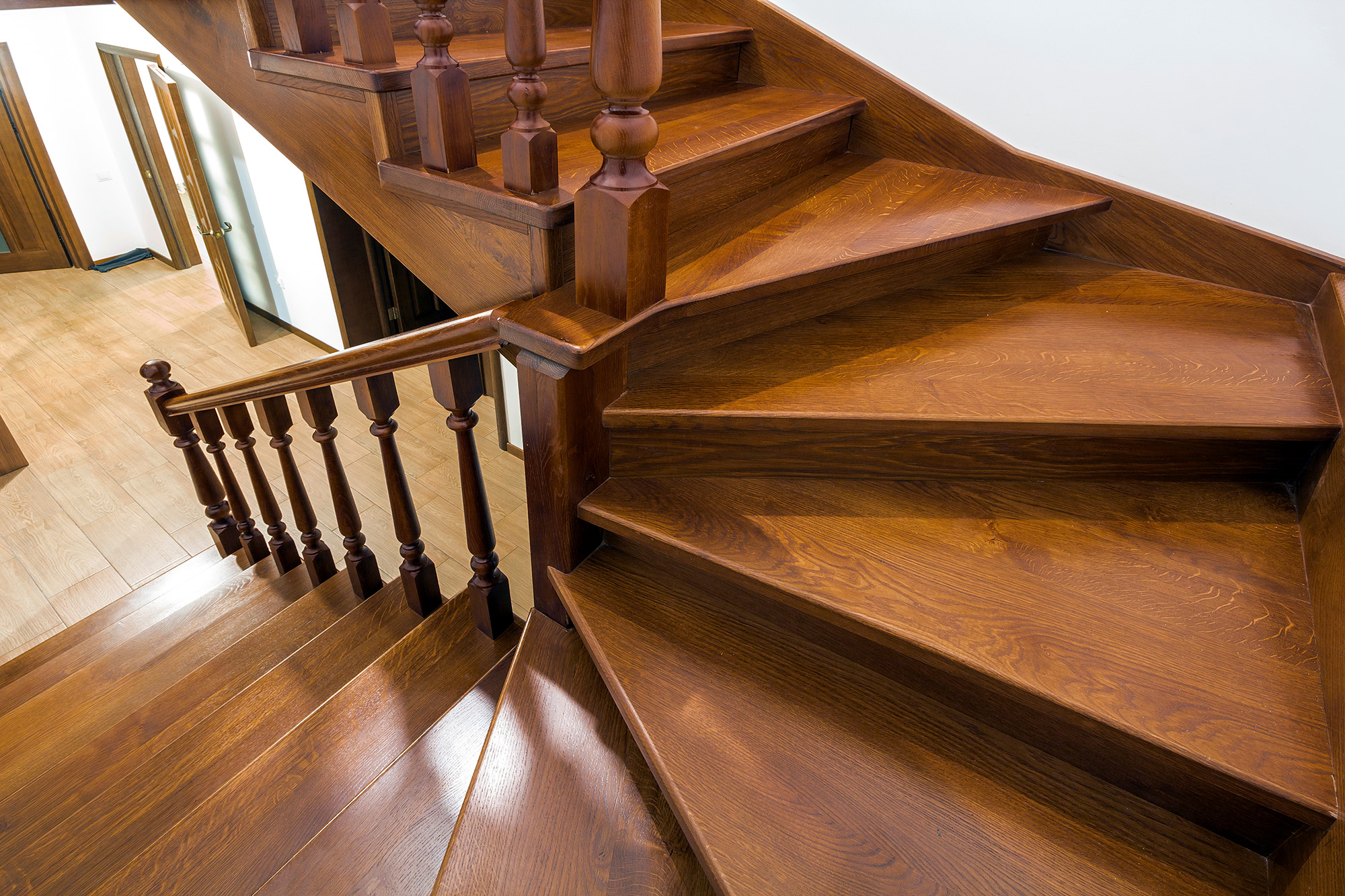
Why Every Step Puts More Stress On The Wood
Walking across a flat floor distributes your weight relatively evenly as your foot rolls through a normal stride. Walking down a staircase does the opposite, concentrating your full body weight onto the leading edge of a stair tread with each step, often with a small amount of sliding or scuffing motion as your foot makes contact. That combination of concentrated weight and repeated small movement is far more aggressive on a finish than typical foot traffic on a level surface.
The nose of each stair tread, the front edge that your foot strikes first, takes the brunt of this force literally thousands of times a week in an active household. This is why the front edge of a stair tread is almost always the first place visible wear shows up, well before the rest of the tread or the surrounding hardwood floor starts to look tired.
Why Stairs Show Wear Differently Than Flat Flooring
Flat flooring tends to wear gradually and somewhat evenly across a room, especially in wide open areas where foot traffic naturally spreads out. Stairs concentrate that same amount of use into a much smaller surface area, since every single person using the stairs steps in almost exactly the same spot on the way up and down. That repetition on such a small, defined area is what causes visible wear patterns to show up faster on stairs than almost anywhere else in a home.
Lighting also plays a role in how noticeable this wear becomes. Staircases are often lit from an angle, whether from an overhead fixture or a nearby window, which can highlight scuffing and dulled finish more dramatically than the same amount of wear would look under the flatter, more even light typical of an open living space.
What Actually Helps Stairs Hold Up Longer
A finish with strong abrasion resistance makes a real difference on stairs specifically, since it is standing up to a fundamentally more demanding kind of daily use than a flat floor sees. Water based polyurethane finishes and certain factory applied finishes on prefinished hardwood tend to hold up well here, and it is worth asking specifically about stair tread durability when you are choosing a finish rather than assuming the same product performing well on your living room floor will automatically perform the same way on your stairs.
Stair treads can also be refinished or replaced independently of the rest of your hardwood floor when they start to show their age, which is worth knowing if you are trying to plan a budget around ongoing maintenance. Addressing worn treads on their own timeline, rather than waiting until you are ready to refinish the entire floor, often keeps a staircase looking sharp without requiring a full home project every time.
When Luxury Vinyl Makes Sense For A Staircase Instead
Not every staircase needs to be hardwood, and for households with heavy daily stair traffic or active kids and pets, luxury vinyl is genuinely worth considering as an alternative. Its rigid core construction resists the kind of scuffing and denting that shows up fastest on stair noses, and it can be a practical choice for a staircase that connects to a basement or a frequently used side entrance where moisture exposure is also a factor. This is not a case of one material being better than the other across the board, it comes down to how the specific staircase in your home actually gets used day to day.
Our hardwood selection includes finish options built with durability in mind for high traffic areas like stairs, and our team can help you weigh hardwood against other materials based on how your household actually uses that particular staircase.
Every staircase wears differently depending on daily traffic, finish, and how it connects to the rest of your home. Our team has helped homeowners across Rochester Hills, MI, South Lyon, MI, Pontiac, MI, Troy, MI, Novi, MI, Walled Lake, MI, Rochester Hills, MI, South Lyon, MI, Pontiac, MI, and Troy, MI figure out the right approach for stairs that are showing their age faster than the surrounding floor.
Visit either of Rochester Hills, MI to talk through finish and material options in person, or contact us at Perfect Floors to schedule a consultation about your specific staircase.


