

Wear Layer Is The Wrong Number To Focus On
Wear layer thickness, measured in mils, is the spec most people ask about first, and for a home gym it is close to irrelevant. Wear layer governs resistance to abrasion, meaning scuffing, scratching, and surface dulling from foot traffic and grit. That matters enormously in a kitchen or a hallway. A home gym does not primarily abrade a floor. It loads it.
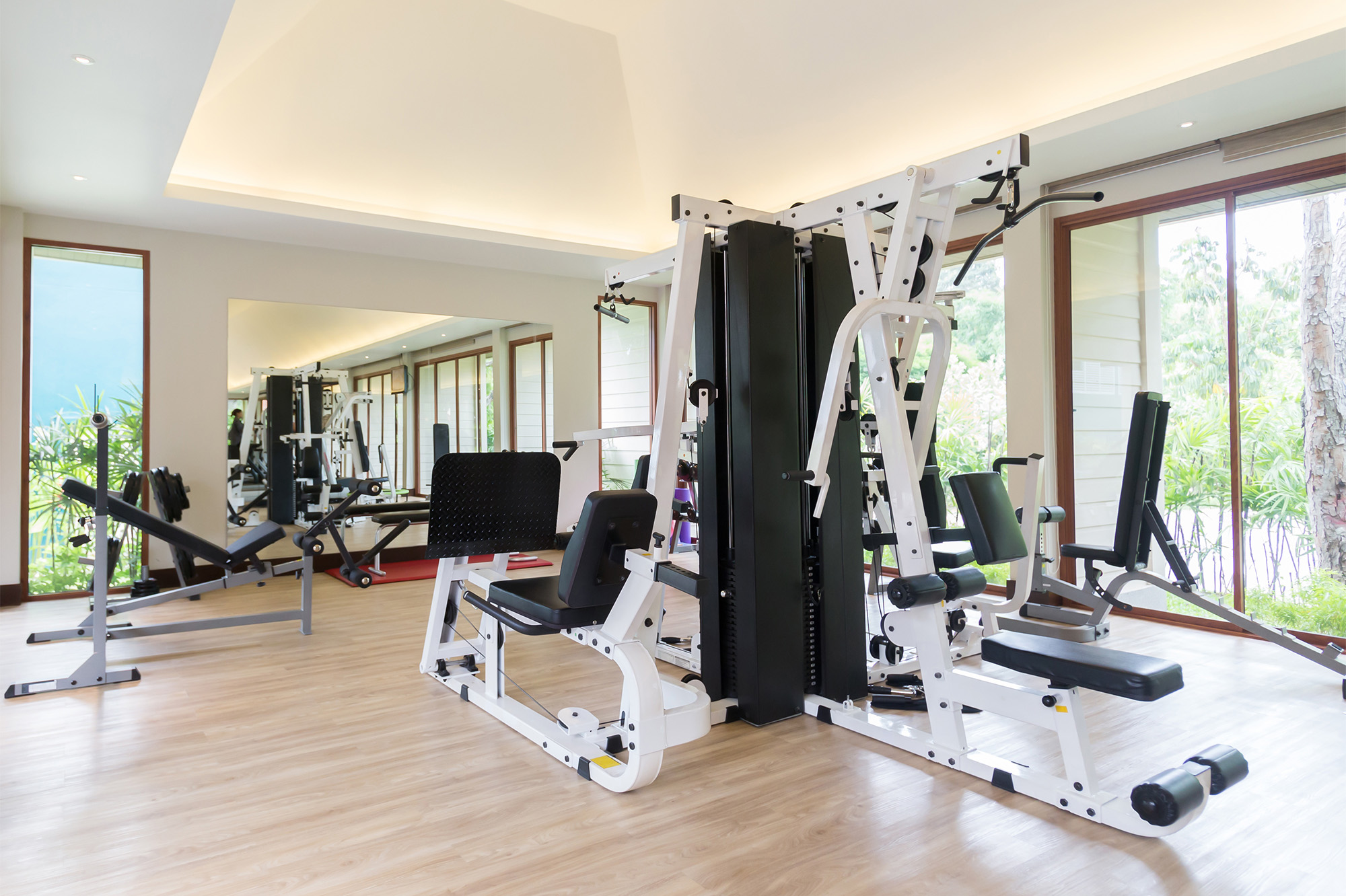
The spec that actually matters for a gym is indentation resistance, sometimes expressed as static load rating, which describes how the floor responds to concentrated weight sitting in one place or striking it. A rack, a heavy bench, or a loaded plate tree applies sustained point loading through a small contact area, and that is a fundamentally different stress than someone walking across the room. Two vinyl products with identical wear layers can perform completely differently under a rack, which is why comparing that one number leads people to the wrong product.
Impact Performance Depends On The Subfloor Underneath
Rigid core vinyl is strong in compression, but its behavior under impact is governed almost entirely by what is supporting it. A dropped dumbbell landing over a fully supported section of floor distributes that force into the subfloor. The same dumbbell landing over a low spot, a dip, or an unsupported void has nothing beneath it to absorb the energy, and the core flexes into the gap. Repeated enough times, that is where cracking or separation shows up.
This is why subfloor flatness matters more in a gym than in almost any other room, and why the same product can perform beautifully in one basement and fail in another. Basements are the most common home gym location in Michigan homes, and concrete slabs frequently have gradual dips that were never an issue until someone started dropping weight on them. Assessing flatness before installation is not an upsell in this context. It is the difference between a floor that holds up and one that does not.
The Rubber Mat Problem Almost Nobody Warns About
Here is the part that catches serious lifters off guard. The standard move is to protect vinyl by laying rubber gym mats over it, which sounds obviously correct and frequently causes permanent damage. Many rubber products, particularly recycled rubber mats and the backing on some rubber tires and equipment feet, contain compounds that migrate into vinyl over extended contact. The result is a yellow or brown stain in the exact shape of the mat, and because the discoloration happens within the vinyl rather than on top of it, cleaning does not remove it.
The practical workaround is to check whether a mat is specifically labeled as non staining or safe for use over resilient flooring, since plenty of manufacturers now produce mats formulated to avoid this. A barrier layer between the rubber and the vinyl also works. Equipment feet deserve the same scrutiny as mats do, since a treadmill or rack sitting directly on vinyl for years has the same contact condition in a much smaller footprint. This single detail causes more home gym flooring complaints than product durability ever does.
Matching The Product To How You Actually Train
How the room gets used should drive the specification more than the room label does. A space used for yoga, a treadmill, and light dumbbells has very different requirements from one built around a platform and heavy barbell work, and buying for the heaviest possible scenario when you train lightly means paying for performance you will never use. Being honest about the actual training style produces a better outcome than defaulting to whatever is marketed as toughest.
Basement gyms carry one additional consideration worth naming. Moisture performance still matters in a below grade space regardless of what the room is used for, and rigid core products in our luxury vinyl selection are built with that environment in mind. That does not mean vinyl is automatically the right answer for every home gym, since dedicated rubber flooring is purpose built for heavy lifting and is genuinely the better tool for some setups. The right choice depends on whether the room doubles as living space or exists solely for training.
Gym flooring decisions go wrong when the product gets chosen before anyone asks what is going in the room. Our team has helped homeowners across Rochester Hills, MI, South Lyon, MI, Pontiac, MI, Troy, MI, Novi, MI, Walled Lake, MI, Rochester Hills, MI, South Lyon, MI, Pontiac, MI, and Troy, MI think through subfloor condition, equipment layout, and realistic training loads before ordering material.
Visit either of Rochester Hills, MI to see indentation ratings and product options in person, or contact us at Perfect Floors to have your space evaluated before installation.


