

Undertone Matters More Than Light Or Dark
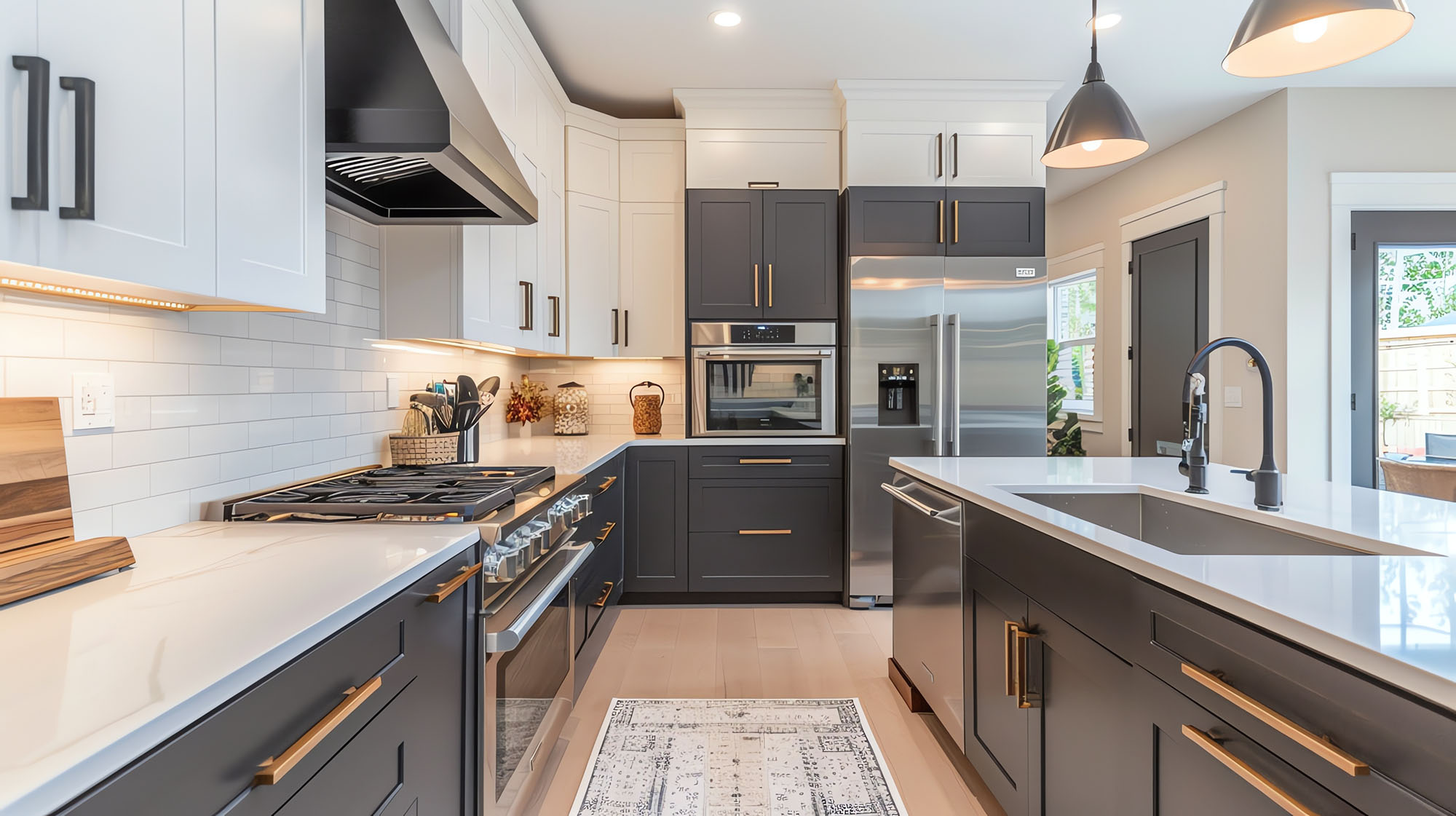
Most people approach this decision as a brightness question, asking whether the floor should be lighter or darker than the cabinets. That framing skips the factor that actually determines whether a pairing looks intentional. Every dark cabinet color carries an undertone underneath its surface color, and charcoal cabinets can lean blue, green, brown, or genuinely neutral depending on how they were formulated. Two cabinets that both read as dark gray in a showroom can sit in completely different undertone families.
Wood look vinyl carries undertone as well, typically warm with red or gold, cool with gray or taupe, or neutral. The mismatches that look wrong in a finished kitchen are almost always undertone conflicts rather than brightness problems. A cool blue leaning charcoal cabinet next to a strongly red toned wood look floor creates a visual tension most people can feel without being able to name it. Identifying the undertone in your cabinets before looking at a single floor sample eliminates most of the bad outcomes.
Dark Cabinets Absorb Light So The Floor Has To Return It
There is a practical lighting consequence to dark cabinetry that affects flooring choice directly. Dark surfaces absorb a much larger share of the light hitting them than pale surfaces do, which means a kitchen with dark lower and upper cabinets loses a significant amount of ambient bounce compared to the same kitchen in white. In a room with limited natural light, the floor becomes one of the largest remaining surfaces capable of reflecting light back up into the space.
This is why light to mid tone flooring tends to work so well beneath dark cabinets in practice, even when a homeowner initially wanted a dark floor for drama. It is not a style rule, it is a light budget question specific to your room. A kitchen with generous south facing windows can carry a dark floor beneath dark cabinets and still feel open. A kitchen with one small north facing window over the sink usually cannot, and the result reads heavy rather than dramatic.
The Near Miss Is Worse Than Full Contrast
One outcome consistently disappoints more than any other, and it is the near match. When a floor lands close to the cabinet color but not close enough to read as deliberate, the eye registers it as an error rather than a choice. The two surfaces compete without either one clearly leading, and the space feels muddy in a way that is difficult to diagnose once everything is installed.
The reliable approaches sit at either end. Clear contrast, meaning a distinctly lighter floor against dark cabinets, gives each surface a defined role and is the safest path in most kitchens. Deliberate tonal layering, where the floor sits very close to the cabinet tone and the difference is carried by texture and sheen rather than color, can look genuinely sophisticated but requires committing fully rather than landing halfway. The failure mode is the middle ground, and it is worth naming because it is where most regret comes from.
How To Test A Pairing Before You Commit
Sheen deserves attention alongside color and undertone. A higher gloss floor beneath dark cabinets creates more visible reflection, which shows light bouncing around the room but also shows every footprint and crumb in a space that already has high visual contrast. Lower sheen options tend to hide daily traffic better and read as more current, though the right level depends on how much natural light the room receives and how much cleaning you realistically want to do.
Testing properly means bringing large samples into the actual kitchen and viewing them against the cabinets at multiple times of day, since morning light, afternoon light, and evening under cabinet lighting can each shift how an undertone reads. Judging from a small swatch under showroom lighting is the single most common reason a pairing that seemed right in the store looks wrong once installed. Our luxury vinyl selection covers a wide undertone range, and taking larger samples home is genuinely worth the extra step on a decision this permanent.
The easiest version of this process starts with a cabinet door or a photograph taken in your own kitchen lighting. Our team has helped homeowners across Rochester Hills, MI, South Lyon, MI, Pontiac, MI, Troy, MI, Novi, MI, Walled Lake, MI, Rochester Hills, MI, South Lyon, MI, Pontiac, MI, and Troy, MI match flooring undertone to existing cabinetry rather than guessing from memory.
Visit either of Rochester Hills, MI with a sample in hand, or contact us at Perfect Floors to arrange samples you can view in your own space before deciding.


